
Water damage restoration, Adelaide Out with the water.Then dry, then clean.

Burst pipes, roof leaks, sprinkler discharge and stormwater. The site is made safe, standing water comes out, the building is dried with readings logged each visit, and then it's cleaned.

4.9 from 59 Google reviewsWe reply the same business day

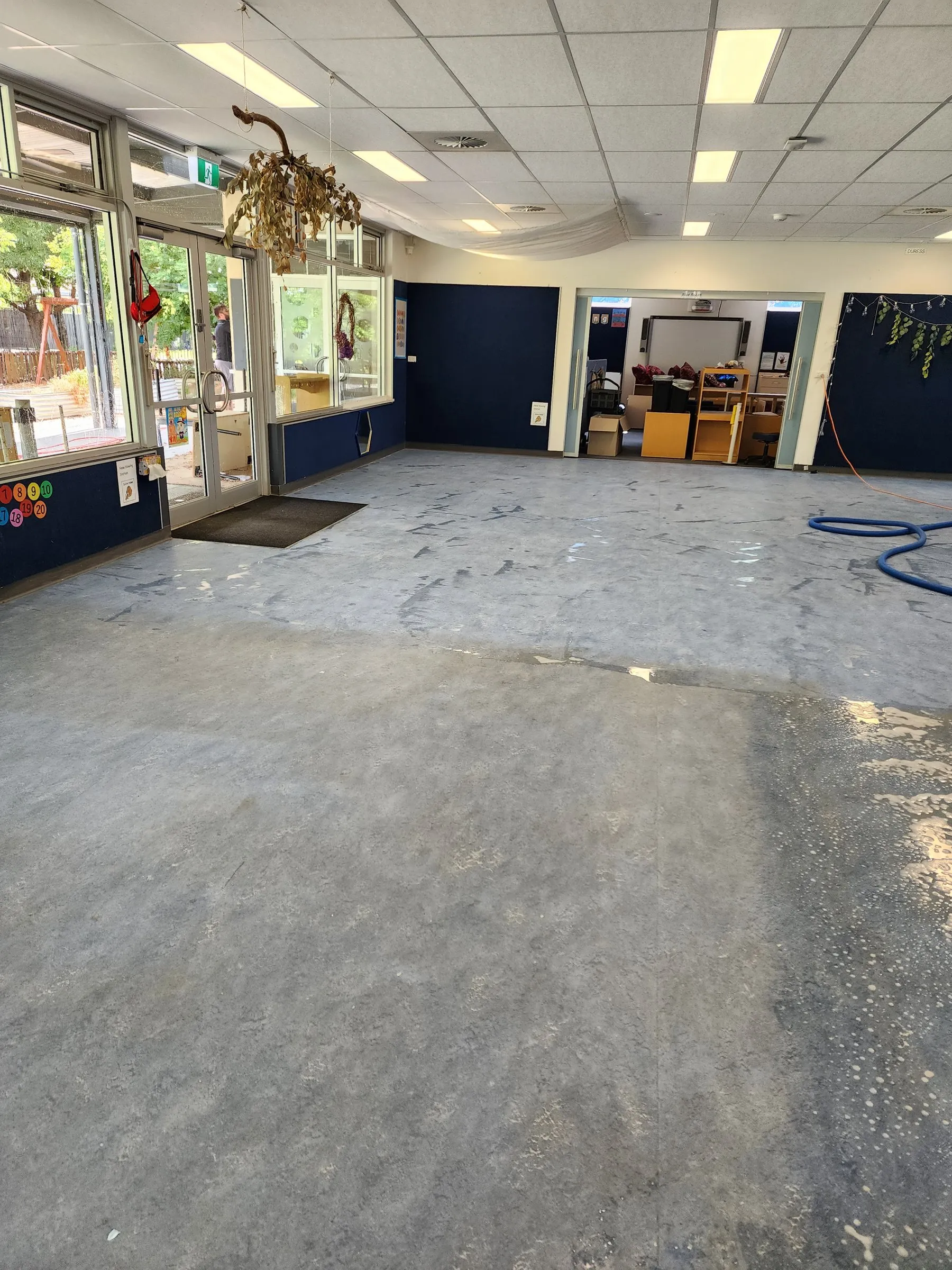
Wide room with a freshly scrubbed blue-grey vinyl floor, still wet
IICRC
IICRC Certified Firm, WRT-certified technicians
Order
Make safe, extract, dry, clean
Drying
Moisture readings logged until dry
Proof
Readings and photos in the visit record

The scope

What a water damage job includes. Step by step.

The scope is written once we've seen the water, the materials and where it's travelled. It lists each area, what stays, what comes out and how dry is measured.

Every water damage job

  • Source stopped and electrical hazards reported first
  • Standing water extracted from floors and carpet
  • Wet materials marked to dry in place or remove
  • Moisture readings taken and mapped by area
  • Drying equipment set up and checked each visit
  • Surfaces cleaned once they read dry
  • Contents moved, lifted or listed as needed

While it dries

  • Moisture readings and equipment checkEach visit until dry
  • Carpet extraction and hard-floor cleanOnce materials read dry
  • Final readings and photosBefore the area is handed back

How we do it

Drying is measured. Not guessed.

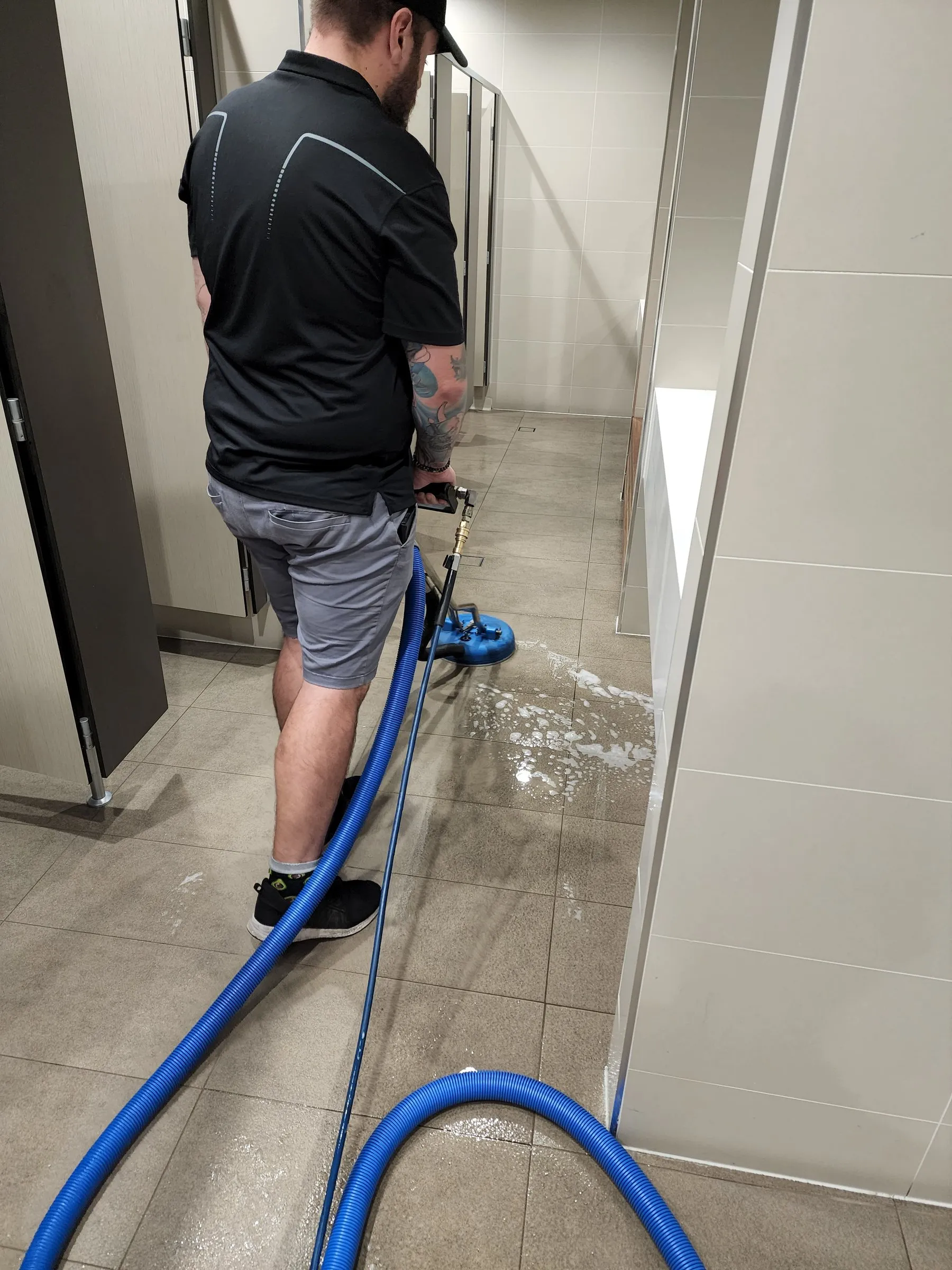
Technician with a hose scrubbing a long tiled corridor

Clean, grey or black water

Where it came from matters.

Clean water from a supply pipe is handled differently from grey water off a dishwasher or black water from a sewer backup or floodwater. Contaminated water means more PPE, porous materials like underlay usually come out, and every surface it touched is cleaned and then disinfected.
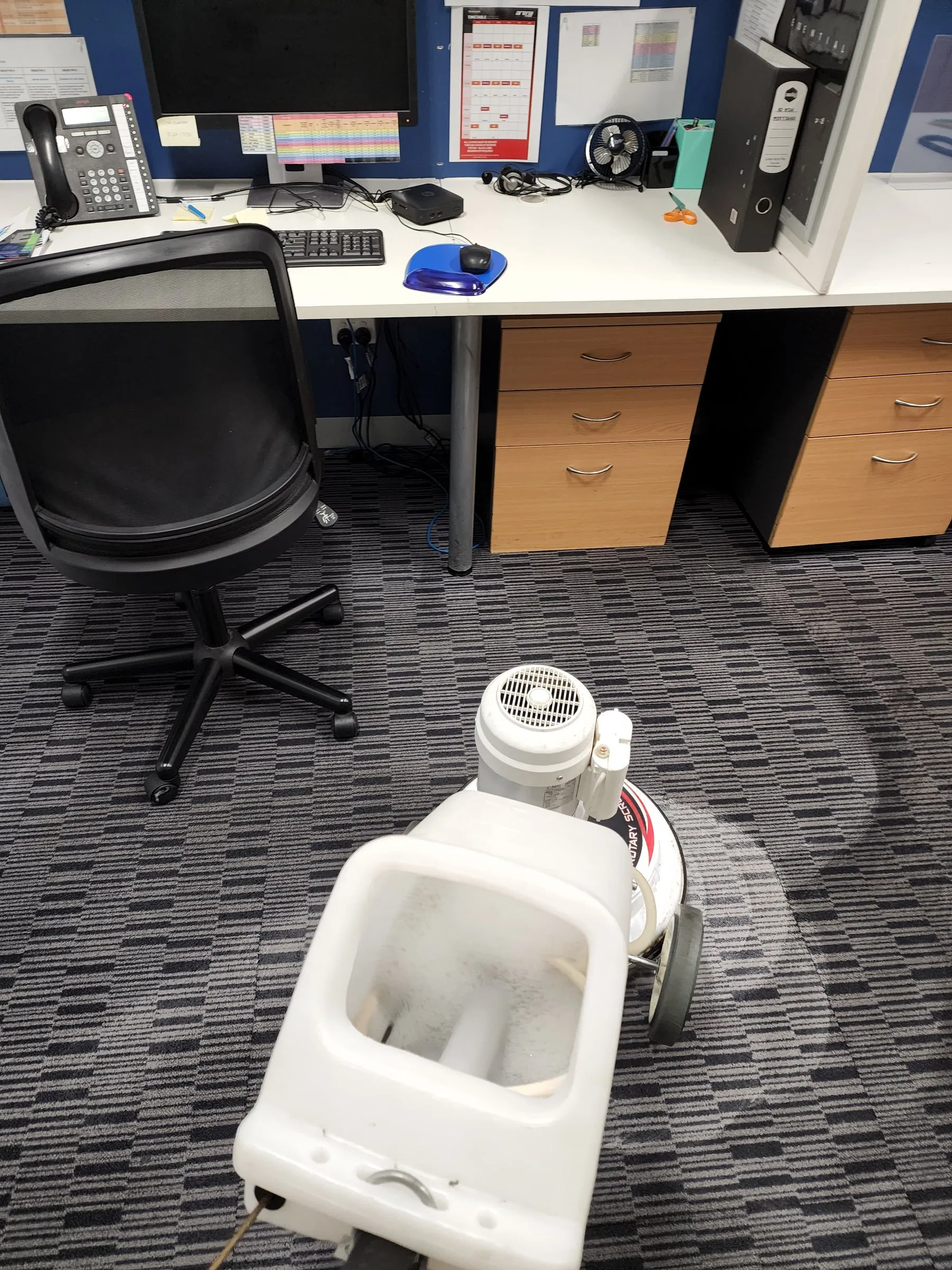
Extraction machine on office carpet tiles under desks

Extraction

Standing water comes out first.

Water is extracted from carpet, tile and concrete before any drying starts, because every litre left behind has to be evaporated. Carpet is checked to see if it can be dried in place or has to be lifted. Underlay that's soaked through usually goes.

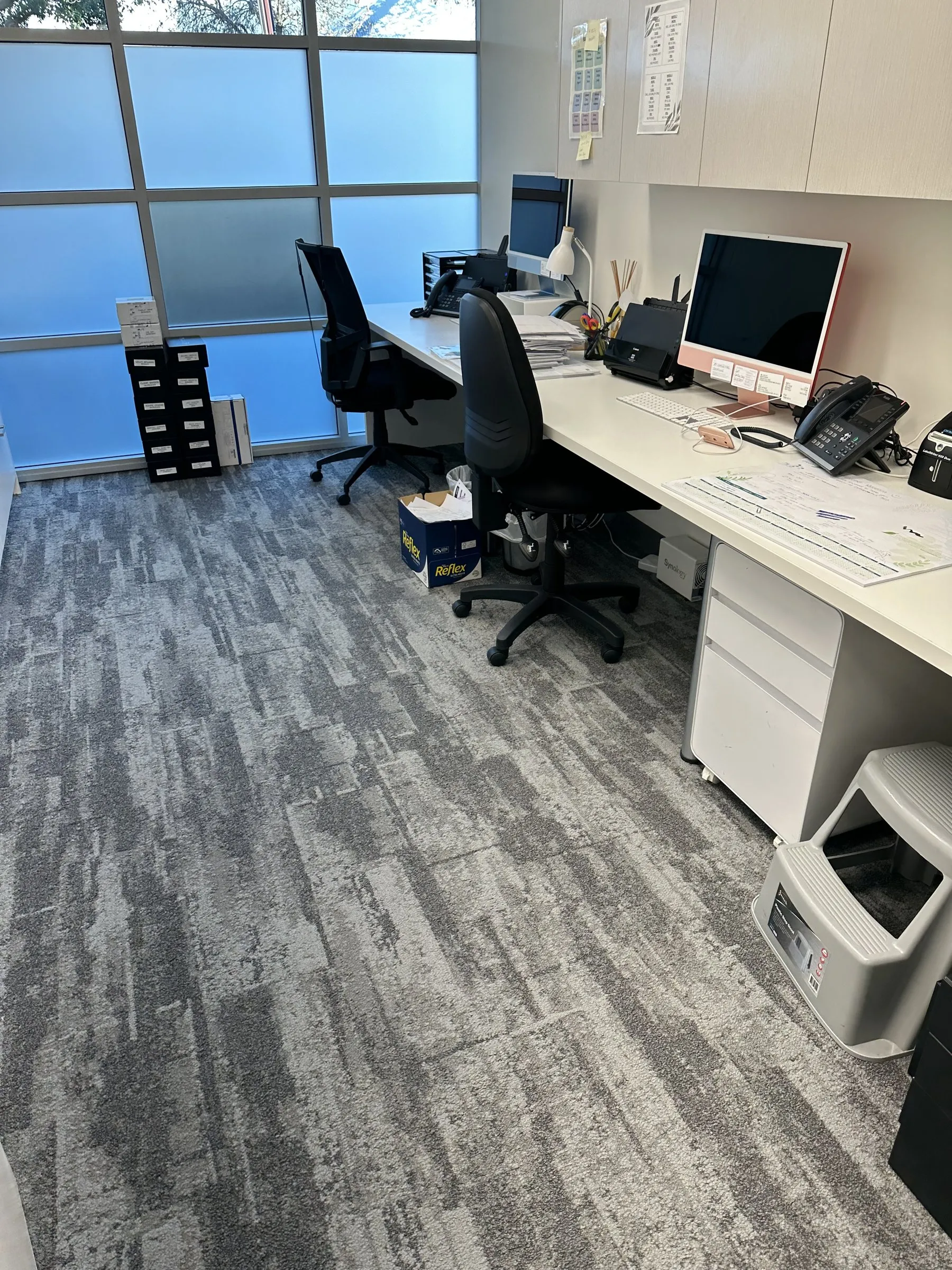
Clean office with carpet tiles and desks

Drying and readings

Dry means the meter says so.

Moisture readings are taken in walls, floors and joinery at the start and on every visit, at the same points each time. Air movers and dehumidifiers stay until the readings match a dry piece of the same material. Then the clean starts, and the last readings go in the record.

Every visit, on the record.

See a visit record
  • In and out

    Time-stamped on arrival and when the visit closes.

  • Ticked

    Each area marked done against the scope you signed off.

  • Photographed

    The areas that matter, finished. Faults flagged with a photo.

Questions

Water damage: questions.

How soon should drying start?

As soon as the source is stopped and the site is safe. Water wicks into plasterboard, timber and underlay, and the longer it sits, the more has to be removed instead of dried. Call and we'll come out to scope it, then start with extraction.

Will the carpet need replacing?

Not always. Carpet wet with clean water can often be extracted and dried in place, sometimes with new underlay. Carpet soaked with grey or black water, or left wet too long, usually has to go. The scope says which, and why.

How do you know when it's dry?

With a moisture meter, not by touch. Readings are taken at the same points on each visit and compared with a reading from a dry, unaffected part of the same material. When they match, the equipment comes out.

What about mould?

Drying quickly stops most mould before it starts. If mould is already growing, the moisture is dealt with first, then the growth is cleaned off or the material is removed. See mould removal.

Can we use the record for an insurance claim?

You can share it. It has the date and time of each visit, the moisture readings, photos of each area and a list of what was removed. Whether a claim is accepted is between you and your insurer.

Do you do the building repairs?

No. We extract, dry and clean. Replacing plasterboard, flooring or joinery is a job for a builder or the right trade, and the record shows them what was removed and where.

Stop the source. Then call us.

We'll come out to scope it: where the water went, what's wet and what can be saved. Then a written scope for extraction, drying and the clean.

Add details (optional)
Best time for the walk-through

We reply the same business day. Your details are used to answer this enquiry and measure our ads, never sold. Privacy

CallBook a walk-through